Boundaries Free Sensitive Idealists/Activists from Overwhelm
Boundaries Move Sensitive Idealists/Activists from Overwhelmed to Thriving
As sensitive people with idealistic dreams and activist lives, we may find it really hard to figure out what boundaries we can accept. It’s hard to know how much to give to others, how to protect our own energy and resources, and how to cope with the feelings that come up around the choices we make about boundaries. All our heartstrings get pulled when boundary issues arise.
Because of our sensitivity, we can be easily overwhelmed by the energy and emotions of other people, which makes it particularly difficult for us to consistently set limits that serve us. As one woman told me, “I’d rather feel all the negative feelings about the boundaries I set than let someone else feel even a bit bad, since then I feel all of their bad feelings, too.” No wonder we agonize.
What Are Boundaries?
Let’s step back and clarify what boundaries are, since there are numerous myths and misconceptions in the public discourse about boundaries. At their core, boundaries indicate where a person ends and another person, animal, or thing begins. Boundaries are designed to provide safety, allowing a person to exist separately from others and to function in ways that meet a person’s unique needs and desires.
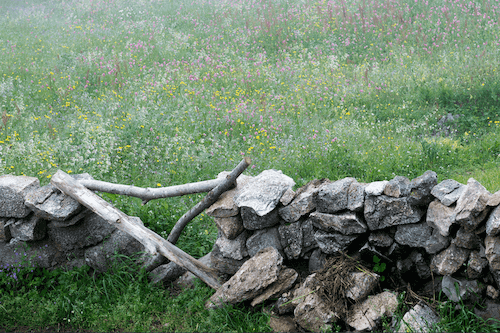
I often compare boundaries to the ways that two pieces of land may be separated. Sometimes there is an invisible property line. At other times, a fence, a wall, even an armed fortification may demarcate the two territories. One boundary isn’t necessarily better than the other, but they may serve different purposes. It’s convenient, perhaps, to have an invisible property line between neighbors who like to visit one another. Adding a fence around that yard may allow one’s dog to explore while staying safely inside, and a gate in the fence would allow those neighbors to continue to have access.
Healthy boundaries are flexible and adaptable, changing to adjust to a person’s changing life and the changes around them. The walls and moat surrounding a castle may have been the perfect way to keep its inhabitants secured from outside threats. However, the health of the community depended on gates or bridges that allowed people and goods to pass back and forth. Shutting down access to the castle and creating a siege was a form of extreme self-protection. Carried on indefinitely, a siege would threaten the lives of those inside the walls. Similarly, our boundaries may stifle us if they are too rigid and don’t allow us to connect with people and resources that nurture us.
Why Are Healthy Boundaries Especially Important for Highly Sensitive People?
HSPs are very susceptible to feeling other people’s energy, emotions, needs, and desires. If we don’t have a clear sense of ourselves, we may be susceptible to feeling pressured to adjust our boundaries to accommodate other people, just like my client did. This process can start in childhood, so by the time we reach adulthood, we have little sense of who we are.
Without that self-knowledge, it’s very hard to recognize that a boundary could be set, let alone figure out what a healthy boundary looks like or how to follow through on setting it. We become experts at meeting other people’s needs and desires. Unfortunately, this is unsustainable, setting us up for resentment, burnout, and suffering.
Singularly Sensitive Ways to Protect Your Boundaries as a Sensitive Idealist/Activist
The Singularly Sensitive approach of Explore-Experiment-Integrate can help us better clarify our values, discern our needs and desires, and recognize how we might begin to make small changes in the ways that we set boundaries.
Explore
Knowing yourself is the first step toward setting boundaries that work for you. Many of us have learned to be chameleons, blending in and taking care of those around us. It’s not uncommon for HSPs to struggle moment to moment to know what they prefer, need, or value.
Start to notice places in your relationships where you feel uncomfortable, anxious, irritated, resentful, or mad. Pay attention to what your feelings are trying to tell you about yourself, the relationship, and the situation. These emotions are signs that our boundaries aren’t giving us the space we need. Perhaps our resentment comes from doing too much for someone, or our anxiety is about someone asking us to step outside our comfort zone.
Whatever you are feeling is perfectly acceptable. Boundaries are unique to each of us, so our feelings about them are, too. Your boundaries can and should change to fit whatever situation you find yourself in at a given moment. To go back to the backyard example, one person may like a wooden fence; another prefers tightly grown evergreens; another has nothing physical to mark the boundary. And someone may revise their boundaries if circumstances change, just like you might reconsider an open yard if your new neighbor consistently ignores the property line.
Allow yourself to explore your boundaries without judging them. The goal at this stage is to notice, gather data, and reflect on what happens with the kind of boundaries you set and how you feel about what happens. Be gentle with yourself as you identify ways that you may want to make changes.
Experiment
Once you come to understand more about what boundaries mean to you, you can begin to experiment with how to set boundaries in new ways. This phase is often challenging for HSPs, since change can stir up many emotions in us that we need to manage so that we can experiment with new behaviors. We also tend to be attuned to others’ reactions to us. Not surprisingly, some people may not like the new boundaries we set, and we will need to learn how to persevere.
You may not always be pleased with the outcome of your experiments in boundary setting. You may set a boundary too far out, keeping someone at a greater distance than is helpful to meeting your goals. Perhaps your effort to maintain a boundary will be heavy-handed or too rigid. On the other hand, perhaps your boundary will be porous, and you’ll allow someone to come too close to you. These struggles are a normal part of learning a new skill set. Take stock of your efforts and keep experimenting. Practice will serve you well.
Integrate
As you continue to explore and experiment with boundaries, you can put to good use your HSP ability to deeply process your experience. Allow yourself to journal about what boundary setting is like and how new ways of managing boundaries fit with your overall sense of self. See if you can identify ways to soothe yourself when you feel emotional about setting boundaries.
Get support for your boundary-setting work. Perhaps someone you know is a model of how to set boundaries in a healthy way. If you can’t think of anyone you know personally, see if there is a fictional character who would make a good model (or create one, if you’re inclined). Therapists, coaches, and support groups can also help you refine your skills and get encouragement for the process.
Acknowledge the ways that being an HSP makes it harder for you to set boundaries, as well as ways that your sensitivity is an asset. For instance, one client told me that her ability to sense how her coworkers are feeling about her helps her to frame her boundary requests in a gentle but clear manner. She believes that this leads to her coworkers respecting her boundaries, even if they may disagree with her.
How Boundaries Enhance a Singularly Sensitive Life
Figuring out your own unique ways of setting and adjusting boundaries helps you create more of the Singularly Sensitive lifestyle you desire. You’ll learn ways to reduce or prevent overwhelm. You’ll be better able to protect your emotional life and your energy. And boundaries will help you create the space for you to focus on doing the important things you value, getting your own needs met while staying connected to other people.
One woman said to me, “having boundaries makes me just a little less reactive-sensitive, without losing the good parts of being highly sensitive.” That’s a great definition of learning to thrive and live a Singularly Sensitive life!